

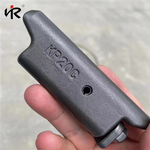


Expendable Pattern Casting
China Expendable Pattern Casting Manufacturers Factory Suppliers
We specialize in producing all kinds of Expendable Pattern Casting products, mainly Bucket Lip Protectors, Bucket Wing Shrouds, Cast End Bits, Mining Machinery Wear Plate, etc.
HANRUI STEEL CUSTOMIZATION was established in 2009, boasting over 10 years of manufacturing experience, can provide customers with perfect solutions.
Our market is mainly concentrated in countries such as the United States, Australia, Canada, Finland, Belgium, Bulgaria, Germany, Japan, United Kingdom, Netherlands, Sweden, etc. We have established long-term cooperative relationships with customers around the world.
Company Advantages
Well-Experienced
HANRUI STEEL CUSTOMIZATION was established in 2009, boasting over 10 years of manufacturing experience. With a dedicated team casting engineers, and mechanical designers, we are committed to offering solutions to the steel accessory challenges faced across various industries.
Large Scale
With shares in two investment casting bases, one sand casting base, and two forging bases, we offer comprehensive one-stop services to our customers. From initial design and development to the delivery of flawless steel parts, we ensure a seamless and efficient process.
Advanced Production Equipment
We are a full-service company providing complete design, R&D, production and sales services. Our production workshop is equipped with the most advanced equipment. Innovation, powerful technology, and expertise make our equipment highly automated with various parameters that can be adjusted to meet the needs of most applications in the industry.
24-hour Online Customer Service
We have an experienced and professional customer support team to provide flexible service to customers around the world. Our customer service is available online 24 hours a day. After receiving the service information or feedback from the customer, we will reply and address the feedback in the shortest time.
Global Sales Network
Our market is mainly concentrated in countries such as the United States, Australia, Canada, Finland, Belgium, Bulgaria, Germany, Japan, United Kingdom, Netherlands, Sweden, etc. We have established long-term cooperative relationships with customers around the world. In addition, we also provide OEM/ODM manufacturing services to many customers.
Customized Services
We welcome product customization, and our team is capable of developing new products or providing technical solutions tailored to customer requirements. lf you have any special request, pls send us the details.


Introduction to Expendable Pattern Casting
Expendable pattern casting is a manufacturing technique that uses a low melting point material to create a pattern, and then builds a mold around it. The pattern is then melted or burned out when metal is poured in, and the mold must be destroyed to retrieve the casting.
Expendable pattern casting uses dry sand to mold and duplicate a prototype. It produces castings with high precision geometry, and a surface finish close to precision casting.
Expendable pattern casting refers to any manufacturing technique where the molds become expendable instead of reused. So, the lost-wax process, sand casting, and investment casting falls into the expendable pattern casting category.
For processes that retain the mold so that it may be reused again and again, these techniques fall into the non-expandable mold casting category. Centrifugal casting, die casting, continuous casting and permanent molding are all non-expendable casting processes.
Advantages of Expendable Pattern Casting
Versatility
Expendable pattern casting can be used to produce complex shapes and intricate designs that may not be possible with other casting methods.
Cost-effectiveness
Since the molds used in this process are made of low-cost materials, it is an economical process for producing small to medium production runs.
High-quality surface finish
The molds used in this process can produce parts with high-quality surface finishes, which often require little or no additional machining.
Wide range of materials
Expendable pattern casting can be used to produce parts from a wide range of materials, including aluminum, copper, magnesium, and various alloys.
Expendable pattern casting is a process of metal casting that uses a mold that is broken when finished and unable to be used again. Common expendable pattern casting processes include the following methods:
Sand Casting
Sand casting has been used for centuries and remains one of the most common and simplest expendable pattern casting processes. As an ancient casting technique, sand casting is ideal for manufacturers with smaller budgets and versatile component production demands.
Shell Casting
Like sand casting, shell casting uses sand, but within a finer state and formed within a hardened shell rather than a filled flask. Due to the use of resin, shell casting produces a polished finish and precise creation capabilities suitable for intricate small and medium-sized items.
Investment Casting
Investment casting, also known as "lost-wax casting", is a reliable expendable pattern casting technique for producing accurate, consistent, and versatile components. Investment casting can be a more expensive process but has the power to produce intricate contours.
Plaster Casting
Plaster casting is a cost-effective metal molding solution due to the low expense of the plaster and its ability to produce near-net shape results. However, plaster casting is limited to low melting points and non-ferrous materials.
Lost-Foam Casting
Lost-foam casting is characterised as an evaporative-pattern process that uses foam. By using a foam material, this form of expendable molding is cheaper and easier to remove the cast after solidification.
our products
Bucket Lip Protectors
Bucket lip protectors are used to protect the bucket of an excavator. They can be welded on or mechanically mounted.
Without bucket lip protectors, the leading edge of the bucket is exposed to constant abrasive wear. This can lead to excessive lip wear and may shorten the lifespan of the lip.
Here are some bucket lip protectors:
● Weld-on lip shrouds: These can be used for most mining excavators.
● Bucket lip shrouds: These can be weld-on or bolt-on between adapters. They are made from high quality alloy steel and sand-cast.
● Weld-on adapter: This is cut into the sidewall of the bucket and comes down on top of the tooth adapter or lip plate. It can be fitted to any bucket system.
● Sidecutters: These can be weld-on and bolt-on.
● External wearplate: This is designed for fitment to high wear areas.
● Heel pads: These are low profile and welded.
Bucket Wing Shrouds
A bucket wing shroud is a component used in heavy equipment buckets to protect the bucket's edge from wear and tear.
Bucket Wing Shrouds are designed to protect buckets from wear and premature failure. They can be designed to protect the flanks and the welds connecting the blade to the bucket in abrasive environments by distributing the load to the bucket beam.
Bucket Wing Shrouds can also protect the corner of the bucket and adapt to its curvature. They can be made from high quality alloy steel and produced through a sand-casting process.
Mining Machinery Wear Plate
A mining machinery wear plate is a sacrificial plate that protects equipment from the abrasive nature of raw materials. Wear plates are used in many machines and products in the mining industry, as well as construction and quarrying.
Wear plates are abrasion-resistant plates or liners that reduce wear and tear on surfaces exposed to intense rolling abrasion and impact. They are made from a duplex material that consists of a tough, wear resistant alloy coating and a shock absorbing steel or chromium steel backing plate.
Mining Machinery Wear Plates can be made of mild steel, abrasion resistant grades, flame hardened grades, or through hardened materials. The type of wear plate you choose can have a big impact on the longevity of your equipment. For example, heavy, bulky wear plates on fixed plant machinery may seem more durable, but they can actually strain the equipment. Lighter, thinner wear parts can be more effective.
Cast End Bits
Cast end bits are designed to withstand abrasive and impact applications. They are made from cast alloy and are designed to meet the needs of earth moving applications.
Cast end bits creates more advantages comparing with machined end bits:
● Max depth countersinking to help protect the bolts.
● Contoured design for even load distribution.
● More wear material where it matters most in the critical areas.
● Lifting eye help it easily to be installed.
● Cast steel material better than rolled steel.
Applications of Expendable Pattern Casting
Here are some applications of expendable pattern casting:
Ceramic mold casting
This method uses expendable molds to create precise metal parts. The mold's ability to support intricate patterns and designs makes it good for everything from home foundry castings to complex industrial components.
Plaster casting
This casting is used in various industries and applications such as aerospace, art, jewelry, and automotive.
Lost-wax process, sand casting, and investment casting
These are all examples of expendable pattern casting.
Basic Steps in Expendable Pattern Casting Process
Patternmaking: To create a casting mold, a manufacturer must first design a physical model. The process of fabricating this model is called patternmaking. Using computer-assisted design (CAD) systems, the manufacturer designs dimensions and geometry of a mold, and then packs an aggregate material, such as sand, concrete or plastic, around the pattern. Once the pattern is removed, the mold cavity in the sand can be filled.
Coremaking: Many part designs require the inclusion of cores in the casting mold. Cores are solid materials placed inside the mold cavity to create interior surfaces of a casting. For example, a metal pipefitting will require a cylindrical core inside the mold cavity to create the hollow construction of the component's interior.
Molding: At this point, the manufacturer can create the casting mold. A material such as sand, plaster or wax is used in expendable mold casting, whereas metal and other durable materials are used in non-expendable mold casting techniques. The material fills the casting mold model and is allowed to harden, at which point the manufacturer removes it from the cavity and the casting of the component can now begin.
Melting and Pouring: Metal must be properly melted prior to being placed in the mold. Typically, this is done by using what is known as a crucible. Crucibles are containers made of porcelain or another melt-resistance substance in which a manufacturer can heat a metal beyond its melting point. Once properly melted, the molten metal is poured into the casting mold to cool and harden.
Finishing: Because metal can sometimes fill in cracks in a casting mold or sprues, the pouring channel for the mold, manufacturers must often finish the metal following casting. This can be accomplished through a variety of finishing techniques, including sanding, grinding and buffing. Once proper appearance and surface texture has been achieved, further post-treatment processes such as painting or electroplating may be necessary for some applications.

Here are some maintenance tips for expendable pattern casting:
● Inspect and maintain machinery: Routine inspections can help ensure equipment is working optimally, which can increase the efficiency and productivity of the casting process.
● Keep equipment clean and well lubricated: Clean every part of the machine, including viewing windows, cutters, spindles, tool holders, fixtures, and jigs.
● Reduce rapid cooling and heating
● Reduce injection speed
● Clean up blister and aluminum skin
● Reduce pouring temperature
● Re-lubricate with high-temperature grease after assembly
● Avoid compression to your molds resulting from residues of the product
● Prevent damages from a high level of pressure
● Sharpen milling tools routinely
● Refer to the instruction manual
Followings are few safety tips that one should know if he/she is dealing with expendable pattern casting process or alloys:
● Wear eye protection, gloves, spats (covering top of feet), and thick clothing protecting all exposed skin on arms and legs. NO polyester or synthetic clothing.
● Sand Floor in pouring area shall be clear of all objects not involved in pouring.
● Clamp or weight up molds that require it.
● Metal added to heat must be free of moisture and impurities.
● Metal added to heat during melt must be preheated.
● Skimmers and other melting tools must be preheated before use.
● Move Slowly while removing crucible from furnace and moving to mold.
● Do not look into exhaust during operation.
● Inspect crucibles before use.
● Inspect propane lines.
● Use outdoors only.
● No alcohol or drug use.
● Wear respiratory protection while melting copper-base alloys (brass, bronze).

Our Factory
We have a fully automatic CNC production line, and are committed to providing customers with the best products and services.


Frequently Asked Questions
Q: What are the Disadvantages of Expendable Pattern Casting?
Less accuracy in comparison to permanent mold casting
The process normally exceeds the intended weight
Less sustainable due to molds being non-reusable
Q: What factors need to be considered when using Expendable Pattern Casting?
Type of material: each metal and casting material retains specific characteristics (hardness, melting point, density, etc.) that will affect the casting process.
Cooling rate: This factor depends largely on the type of material from which you craft the mold. Proper cooling is necessary to minimize gas porosity and other negative properties that can result from a fast cooling rate.
Shrinkage: As castings cool, they shrink. To ensure proper component size and integrity, you can utilize risers to feed additional molten metal into the cavity. An oversized mold may also be useful in some applications.
Q: What are the challenges of Expendable pattern casting?
Dimensional accuracy: While expendable pattern casting can produce intricate shapes and designs, it may not be as precise in terms of dimensional accuracy as other casting methods.
Limited scalability: Expendable pattern casting is not well-suited for high-volume production runs, as it can be time-consuming to create and dispose of the molds.
Environmental impact: The process can generate a significant amount of waste material, which can have an impact on the environment if not properly disposed of.
Q: What are the differences between Expendable Pattern Casting and Non-Expendable Mold Casting?
Expendable molds are consumed during the casting process, while reusable molds can be kept in service as long as they're in acceptable functional condition. Some casting processes combine the two categories by pairing expendable cores with a reusable mold to create more intricate internal components.
DESIGN PARAMETERS:
The ideal casting process and type of mold will depend mainly upon the design of the final casted product. For manufacturers who work with multiple raw materials, expendable and reusable molds may be used in the same facility for two separate product lines.
Dimensional tolerance is crucial since some products may need to be as precise as possible, eliminating techniques that can't accommodate near-net casting. Different casting processes' temperatures and injection rates affect precision and shrinkage during cooling.
Manufacturers must also evaluate surface finishing on the casted product's outer side and the inner bore. Some products, such as cast-iron pump housings, can tolerate impurities or uneven edges without posing a quality-control issue. Other items must be treated carefully to maximize strength and eliminate granularity.
Lastly, the final product's shape will also play a role. In general, reusable molds can tolerate more intricate designs than expendable molds. Still, the geometry of the casted object must allow the mold to open once the casting process is complete.
COSTS & PRODUCTION:
Reusable molds have high associated tooling and pattern-development costs. These added upfront expenses can sometimes be justified by a lower individual cost per part for manufacturing operations with substantial volume. Expendable molds are advisable for shorter production runs due to the affordability of base materials like sand or plaster.
Reusable molds are excellent for casting processes that require mass output of precise products. Strong reliability, shorter cooling periods, and minimal waste to clean between cycles allow for increased automation with faster production speeds.
By contrast, expendable molds excel at producing casted products that don't need fine finishes or exact dimensions. Since sand and plaster can't be cooled with water, casting processes with expendable molds take longer to complete.
Manufacturers must also consider ancillary expenses such as occupational safety and environmental protection when calculating casting costs. Expendable molds, which are overwhelmingly made of sand, introduce respirable dust and silica to the workplace. Reusable molds can generate particulate-containing wastewater from cooling during the casting process. Mitigating these hazards can change the financial analysis of which molds are most economically sound.
Q: Why Can't Expendable Molds Be Reused Again?
Q: What are the advantages of Bucket Lip Protectors?
Increased bucket life: Protects the bucket's bucket, which can increase its wear life.
Reduced maintenance: Precision machined components can reduce maintenance and allow buckets to return to digging sooner.
Reduced lip rebuild frequency: Supports the primary lip through wear-package alignment, which can reduce the frequency of lip rebuilds.
Reduced cost of ownership: Can reduce the total cost of ownership of a loader and bucket.
Better penetration: Bucket Lip Protectors have an elevated leading edge profile that provides optimal penetration in all digging conditions.
Q: Why EPC process/lost form casting is widely used in producing wear plate?
Energy efficiency: Lost foam casting uses less energy than sand casting and has a smaller carbon impact.
Reduced waste: Lost foam casting reduces waste production and metal consumption.
Improved safety: Lost foam casting improves safety.
Improved surface quality: The lost foam coating improves the surface finish of the casting, reducing roughness by 2-3 levels.
Reduced costs: Lost foam casting can lead to reduced costs over time because it eliminates extra labor in casting and machining processes, as well as the cost for tooling.
Improved dimensional accuracy: Lost foam casting has the ability to create full, net-shape patterns with unparalleled dimensional accuracy and precision.
Reduced inventory and scrap rate: Lost foam casting reduces inventory and scrap rate.
Molds can be reused: Lost foam casting molds can be used 400,000-750,000 times.
Q: Can wear-resistant plates with plow bolt holes be produced?
Q: How to prevent deformation of long size wear plates?
Q: How to Maintain Bucket Wing Shroud?
Before welding: Use a grinder to machine two chamfers on each side of the bucket's lateral edge.
Installation: Keep frontal contact, and push both inner and outer weld-on bases inside and outside Weldon bases until they touch the wing shroud's legs.
Preheat: Preheat the base material to the recommended temperatures after placement has been confirmed.
Q: How to Maintain Mining Machinery Wear Plate?
Use cast nylon: Cast nylon is naturally wear-resistant and can help extend the life of mining equipment parts.
Use multiple smaller wear plates: Using multiple smaller wear plates instead of one large wear plate is generally recommended.
Use protective covers: Put protective covers in the most exposed parts to reduce damage to the equipment.