

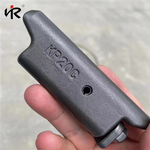


Water Glass Casting Parts
China Water Glass Casting Parts Manufacturers Factory Suppliers
We specialize in producing all kinds of Water Glass Casting Parts products, mainly Alloy Steel Structure Castings, Cast Dredge Teeth, Ground Engaging Tools, Construction Machinery Parts, etc.
HANRUI STEEL CUSTOMIZATION was established in 2009, boasting over 10 years of manufacturing experience, can provide customers with perfect solutions.
Our market is mainly concentrated in countries such as the United States, Australia, Canada, Finland, Belgium, Bulgaria, Germany, Japan, United Kingdom, Netherlands, Sweden, etc. We have established long-term cooperative relationships with customers around the world.
Company Advantages
Well-Experienced
HANRUI STEEL CUSTOMIZATION was established in 2009, boasting over 10 years of manufacturing experience. With a dedicated team casting engineers, and mechanical designers, we are committed to offering solutions to the steel accessory challenges faced across various industries.
Large Scale
With shares in two investment casting bases, one sand casting base, and two forging bases, we offer comprehensive one-stop services to our customers. From initial design and development to the delivery of flawless steel parts, we ensure a seamless and efficient process.
Advanced Production Equipment
We are a full-service company providing complete design, R&D, production and sales services. Our production workshop is equipped with the most advanced equipment. Innovation, powerful technology, and expertise make our equipment highly automated with various parameters that can be adjusted to meet the needs of most applications in the industry.
24-hour Online Customer Service
We have an experienced and professional customer support team to provide flexible service to customers around the world. Our customer service is available online 24 hours a day. After receiving the service information or feedback from the customer, we will reply and address the feedback in the shortest time.
Global Sales Network
Our market is mainly concentrated in countries such as the United States, Australia, Canada, Finland, Belgium, Bulgaria, Germany, Japan, United Kingdom, Netherlands, Sweden, etc. We have established long-term cooperative relationships with customers around the world. In addition, we also provide OEM/ODM manufacturing services to many customers.
Customized Services
We welcome product customization, and our team is capable of developing new products or providing technical solutions tailored to customer requirements. lf you have any special request, pls send us the details.


Introduction to Water Glass Casting
Water glass casting is also called sodium silicate casting. Its casting process is very similar to investment casting (that is the lost wax investment casting method). It is a technology that uses water glass as the binder for the shell to cast. The process provides a far superior surface finish and dimensional precision to that achieved through sand casting. And more complex shapes can be achieved.
A wax pattern is coated with the water glass mixture, forming a ceramic shell. Upon heating, the wax melts, creating a mould cavity. Molten metal is then poured into the mould, and once solidified, the ceramic shell is removed, resulting in finely detailed castings suitable for various applications.
Water Glass Casting is particularly suited to larger castings and is cheaper to produce. The raw materials are mainly steel and iron.
Advantages of Water Glass Casting
Intricate Designs
This method excels in producing intricate and detailed designs with precision, ensuring complex components are accurately cast.
01
High Dimensional Accuracy
Water Glass Casting offers tight tolerances, minimizing the need for extensive post-casting machining.
02
Surface Finish
The process results in smooth and refined surfaces, reducing the need for additional finishing steps and enhancing the final product's aesthetics.
03
Consistency
Water Glass Casting ensures consistent and repeatable outcomes, crucial for maintaining product quality and specifications.
04
Cost Efficiency
Despite initial tooling costs, the reduced post-casting processing and higher precision often lead to long-term cost savings.
05
Our Water Glass Casting Parts
Alloy Steel Structure Castings
Alloy Steel Structure Casting is a steel casting process that involves adding elements to improve its mechanical properties. The elements are alloyed in amounts between 1.0% and 50% by weight.
Alloy Steel Structure Casting is a process that involves melting an alloy and allowing it to solidify in a mold cavity to form a desired shape. The process can use pre-alloyed metals or involve mixing different alloys in the melting process.
According to the different added elements and the appropriate processing technology, the alloy steel structure casting can obtain high strength, high toughness, wear resistance, corrosion resistance, low-temperature resistance, high-temperature resistance, non-magnetic, and other unique properties. Alloy steel is mainly divided into two categories: low alloy steel and high alloy steel. Water Glass Casting alloy steel is usually low alloy steel.
Cast Dredge Teeth
Dredge cutter teeth are wear parts used on dredging equipment to remove sediment from the bottom of bodies of water. They are made in investment casting and are similar to bucket teeth for excavator buckets.
Dredge buckets with teeth have wear-resistant teeth placed on the edge of the bucket to reduce wear and cutting forces. The teeth are easily replaceable and can be made from wear-resistant cast steel.
Ground Engaging Tools
Ground engaging tools (GETs) are metal components that come into contact with the ground during construction and excavation activities. They are heavy-duty tools that perform many jobs, including: Moving, Cutting, Grading, Digging, Lifting, Shifting materials, Absorbing impact for the machine.
Ground engaging tools are typically attachments to larger machines that can be detached for maintenance, attachment, or replacement. They are built tough, with the right design for the work and the necessary protections for components that face excessive wear.
Construction Machinery Parts
HR is involved in producing customized accessories for excavators, bulldozers, loaders, trenching poles, cranes, drilling machines, road planing machines, tunneling machine and so on, especially in casting and forging parts.
The material types of construction machinery parts include wear resistance steel, high strength steel, anti extrusion steel, impact resistance steel, tensile resistance steel, fatigue resistance steel, corrosion resistance steel, high temperature resistance steel, and low temperature resistance steel.

Water Glass Casting Parts are mainly used for heavier or stronger, more complex shapes products. These applications are in the field of trailers, agricultural machinery, and the offshore industry. The process provides a far superior surface finish and dimensional precision than sand casting. It also allows for more complex shapes to be achieved. Besides steel, it is possible to cast alternative materials. Such as regular iron using this method.
Working Principle of Water Glass Casting
Injection of Wax
After the creation of the casting's wax pattern, the molten wax is injected into a mold to produce a wax pattern of the casting. Molds made of Aluminum and sized to accommodate shrinkage in the wax and metal being used. Wax tooling may range from simple two-piece dies to multi-cavity automated dies with water-soluble or ceramic cores.
Assembly of Wax
The wax patterns are attached to a sprue or tree once they've cooled and solidified. The sprue is also composed of wax. It has all the required gates, runners, and supports to feed the component during casting.
Making of Shell
The wax sprue has now been "invested" in ceramics, making the mold for metal to be pouring into. The ceramic comprises of two parts: a liquid slurry topped by a dry sand bed. Each sprue is covering many layer of slurry and sand until the ceramic shell is strong enough for the casting process. It takes between two days and two weeks for shells to dry, depending on how they form.
Removal of Wax
It is important to melt the wax by immersing it in autoclave to counteract the wax expansion. The ceramics are then fired to remove any remaining wax residue and cure the ceramic shell. The shells are ready for casting once it's fired.
Pouring
Before casting, the shells are pre-heated in the oven. After removing the shells out of the oven, and preparing molten metal, the shells are then removed, and the metal is poured into them.
Finishing
To release the casting, the shell may go through hammering. The sprue is then removed and recycled. Finally, remove any evidence of the manufacturing process by cleaning casting.
Craftsmanship
Water glass casting is an ancient art form that continues to captivate us with its elegance and intricacy. The use of different techniques and methods, such as the shell casting technique, investment casting method, and ceramic molding process, ensures the creation of unique and stunning pieces.
Shell Casting Technique
One of the popular methods of water glass casting is the shell casting technique. In this approach, a thin layer of a water glass and silica sand mixture is applied to the surface of the ceramic mold. This coating is repeated several times to build up the desired thickness. The water glass in the mixture acts as a binder, holding the sand particles together. The mold is then heated to cure the ceramic shell, resulting in a durable and heat-resistant mold ready for casting.
Investment Casting Method
Another technique employed in water glass casting is the investment casting method. Here, a refractory material, such as plaster or gypsum, is used to create the mold. The master model is immersed in a slurry of the refractory material, allowing it to coat the surface. After multiple layers, the mold is allowed to cure, forming a hard shell. The wax is then melted out, and the resulting cavity is filled with the molten metal. Once the metal solidifies, the mold is broken to reveal the final cast piece.
Ceramic Molding Process
The ceramic molding process is yet another technique used in water glass casting. Here, the mold is created by dipping the master model into a water glass-silica slurry which is made up of ultra-fine silica particles. The coated model is then dried and repeated several times until the desired thickness is achieved. This method allows intricate details to be captured, thanks to the fine particles in the mixture. Once dry, the mold undergoes a firing process to cure the ceramic shell and remove the wax, ultimately resulting in a ready-to-cast mold.
Our Factory
We have a fully automatic CNC production line, and are committed to providing customers with the best products and services.


Frequently Asked Questions
Q: Stailess steel maerials is suitabel for water glass casting process?
It also can be used to cast special steel. There are many kinds of alloy cast steel made to meet special needs. Usually, it contains one or more high alloying elements to obtain some special properties.
For example, high manganese steel containing 11% to 14% manganese can resist impact wear. It is mostly used for rust-resistant parts of mining machinery and construction machinery.
All kinds of stainless steel with chromium or chromium-nickel as the main alloying element. It is used for parts that work under corrosion or high-temperature conditions above 650 °C. such as chemical valve bodies, pumps, containers or turbine casings of large-capacity power plants.
Q: How does Water glass Casting differ from standard Investment Casting?
These are the wax used in making the pattern, and the material used to form the ceramic shell.
1. Wax used in the Waterglass process:
The Investment Casting process starts with the creation of a high quality wax pattern around which a ceramic shell is produced. This shell forms the mould into which liquid metal is poured. Water glass Casting uses a different type of wax for the pattern, which melts in hot water.
This means that instead of using pressurised steam in an autoclave to remove the wax, the moulds can simply be submerged in hot water. The molten wax floats to the surface and can be skimmed off and re-used.
2. Water glass Casting material:
Waterglass or 'Water Glass' Casting is also known as 'Sodium Silicate' Casting, after the additive used as a binder within the ceramic casting shell.
In Water glass Casting, sodium silicate is added to sand to form the ceramic slurry that is then used to produce the ceramic shell mould. High temperature firing of the shell sinters the ceramic elements together to form a high strength shell suitable to receive the molten metal charge. The advantages of adding sodium silicate are:
It can be used in high temperature moulds (so materials such as iron and SG iron can be cast using this method)
It dissolves in water so is clean and easy to remove
It is suitable for shelling for heavy components
Q: Does the Water glass Casting process look like Investment Casting?
Instead of using an autoclave the wax is melted off in water, then the appropriate metal alloy is poured into the moulds to make the casting.
Q: What materials are suitable for Water glass Casting?
Q: What is the minimum order quantity for water glass casting process?
Q: Why choose water glass casting?
There are many benefits to choosing water glass casting over other methods of glassmaking. Water glass casting produces stronger and smoother glassware than other methods. It also allows for a greater degree of detail and clarity in the final product.
Q: Why is water glass casting a popular method?
Water glass casting is an affordable way to create prototypes and production parts. It is also a good choice for low-volume runs because it does not require expensive tooling. In addition, the process can be used to cast metals, plastics, and other materials.
Q: What are the challenges of Water Glass Casting?
Moreover, water glass casting can be brittle and prone to cracking, especially when exposed to thermal stress or mechanical pressure. Despite these challenges, many industries rely on water glass casting for their manufacturing needs, from automotive and aerospace to jewelry and art. By balancing the benefits and limitations of this technique, metalworkers can unleash their creativity and innovation, while ensuring quality and reliability in their products.
Q: How does alloy steel structure castings perform?
Q: What types of alloy steel structure castings are there?
Q: How do we choose alloy steel structure castings
For example, if your project requires components that are corrosion resistant with high strength. An aluminum or copper-based alloy could be an effective choice. Which alloy you use for your castings depends on which factors are required for your project.
Traditionally, alloy steel structure castings can get better properties than carbon steel castings. By comparison, alloy steel structure castings more for its higher material cost. Alloy steel casting is widely used for industrial applications, such as bucket teeth, agricultural wear parts, and many other industrial components that utilize cast alloy steel parts in their operations.
Q: What are the advantages of alloy steel structure castings?
This design has greater freedom in choosing the shape and size of the casting, especially the complicated shape and hollow part. The unique process of core casting can manufacture the alloy steel structure castings.
2. Strong flexibility and variability in metallurgical manufacturing:
You can choose alloy steel structure castings with different chemical compositions and organizational structures to meet the needs of different projects. Various heat treatment processes can select mechanical properties and use this property in a wide range and improve solderability and usability.
3. Improve the overall structural strength:
Due to the high reliability of the project, coupled with the weight reduction design and short delivery time, alloy steel structure castings can increase their competitive advantage in terms of price and economy.
4. A wide range of weight changes:
Generally, small alloy steel structure castings may only have 10 grams, while large alloy steel structure castings can reach several tons, dozens, or even hundreds of tons.
Therefore, when we need high tensile strength or dynamic load components, critical pressure vessel castings, and core components that bear heavy loads at low or high temperatures, in principle, we should give priority to alloy steel structure castings.
Q: What are the main elements used in water glass casting?