

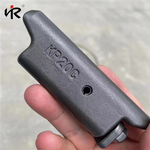


Forged Steel Parts
China Forged Steel Parts Manufacturers Factory Suppliers
We specialize in producing all kinds of Forged Steel Parts products, mainly Hot Forging Parts, Forge Bucket Adapter, Forging Ripper Teeth, Forged Bucket Teeth, Agricultural Machinery Wear Parts, Forestry Machinery Waer Parts, Forged Mechanical Fastener, Coal Mining Cutting Picks, Cold Forging Parts, etc.
HANRUI STEEL CUSTOMIZATION was established in 2009, boasting over 10 years of manufacturing experience, can provide customers with perfect solutions.
Our market is mainly concentrated in countries such as the United States, Australia, Canada, Finland, Belgium, Bulgaria, Germany, Japan, United Kingdom, Netherlands, Sweden, etc. We have established long-term cooperative relationships with customers around the world.
Company Advantages
Well-Experienced
HANRUI STEEL CUSTOMIZATION was established in 2009, boasting over 10 years of manufacturing experience. With a dedicated team casting engineers, and mechanical designers, we are committed to offering solutions to the steel accessory challenges faced across various industries.
Large Scale
With shares in two investment casting bases, one sand casting base, and two forging bases, we offer comprehensive one-stop services to our customers. From initial design and development to the delivery of flawless steel parts, we ensure a seamless and efficient process.
Advanced Production Equipment
We are a full-service company providing complete design, R&D, production and sales services. Our production workshop is equipped with the most advanced equipment. Innovation, powerful technology, and expertise make our equipment highly automated with various parameters that can be adjusted to meet the needs of most applications in the industry.
24-hour Online Customer Service
We have an experienced and professional customer support team to provide flexible service to customers around the world. Our customer service is available online 24 hours a day. After receiving the service information or feedback from the customer, we will reply and address the feedback in the shortest time.
Global Sales Network
Our market is mainly concentrated in countries such as the United States, Australia, Canada, Finland, Belgium, Bulgaria, Germany, Japan, United Kingdom, Netherlands, Sweden, etc. We have established long-term cooperative relationships with customers around the world. In addition, we also provide OEM/ODM manufacturing services to many customers.
Customized Services
We welcome product customization, and our team is capable of developing new products or providing technical solutions tailored to customer requirements. lf you have any special request, pls send us the details.


Introduction to Forged Steel Parts
Forged steel parts are steel parts that have been shaped and strengthened through the use of heat and pressure in a metalworking process called steel forging. Forged steel is created by alloying carbon and iron under extremely high pressure, which results in a material with a finer grain structure, less surface porosity, and greater ductility, tensile, and fatigue strength than other processed steels.
Forged steel parts have many advantages over cast parts, especially for applications that require strength and durability. Forged steel parts also have a tighter grain structure, which leads to greater strength. The grain realigns during the forging process, which is called metallurgical recrystallization. The internal grain structure conformity is the core benefit of forged metal, which gives it many of its advantages over cast and plate metal components. Because the flow of the grain aligns with the geometry of the shape, it becomes very tough and resistant to damage.
The automotive industry is one of the main users of forging due to its high strength and durability. For example, engine components like crankshafts, connecting rods, and pistons are normally made using the forging process due to the high-stress operating environment.
Most components that can be produced via forging could instead be cast. However, forged products offer significant advantages over parts made by casting—especially for applications where strength and durability are paramount. This is because forging fundamentally alters the structure of the metal—in compressing a solid or heated metal, the material undergoes metallurgical recrystallization, which is a beneficial realignment of the metal grain.
After recrystallization, forged parts have much higher impact and shear strength than raw or cast material. As an added benefit, these improvements in strength can be so pronounced that they counteract the need to use expensive alloys to achieve the desired strength.
Additional benefits of forging include:
Tensile strength
A University of Toledo study found that forged parts exhibited 26% higher tensile strength than comparable cast-iron components. As a result, forged components can withstand substantially more tension without tearing than other parts.
Fatigue strength
Forged components have demonstrably higher fatigue strength, allowing for a longer working life versus components made by other methods when observed under the same heavy-duty operating conditions.
Versatility
Both forging and casting can produce a vast array of products large and small. There's rarely a reason to choose casting over forging just to obtain a different shape.
Uniformity
Compared to cast components, forged ones have a more uniform composition and structure, which contributes to their impressive working life.
In addition to surpassing casting on these key metrics, forging also prevents common defects found in casted parts. When casting, it's common for some percentage of the final parts to have unacceptable levels of porosity, shrinkage, or even voids. Such issues can often lead to having to scrap near fully machined cast parts, thus wasting valuable machining time. None of these problems can occur with forging because the material is never melted and reformed.
This consistent quality is a significant advantage, especially in terms of cost. When a cast part exhibits porosity, it must be scrapped and recast, which incurs substantial material and labor costs. Forging entirely mitigates this risk. Forged parts also lead to long-term cost savings because of their durability, decreasing the frequency with which components fail and need to be replaced.
Types of Forged Steel Parts
Hot Forging Parts
Hot forging is one of the most common methods for forging steel and harkens back to the days of the blacksmith with his hammer and anvil. The use of hot forging reduces the amount of force that is necessary to shape and mold the workpiece. Heated steel has better flow, which makes it ideal for open and closed die forging. Additionally, the heating process anneals a workpiece and relieves its stress making it ready for further processing.
With hot forging, the workpiece is heated to a point above its recrystallization temperature. The process of recrystallization deforms grains of the crystal structure, which are replaced by stress free grains that grow until the original grains are gone. It is used in steel forging to eliminate the effects of strain hardening. The recrystallization temperature is one third to one half the melting point of the steel.
Hot forging makes it possible to precisely adjust the fine microstructure of the steel. The strength and durability of the metal can be clearly defined and is used in manufacturing processes with high loads, both static and dynamic, that place demands on products.
Cold Forging Parts
Cold forging deforms steel below its recrystallization temperature or near room temperature. The low temperature of the steel makes the forging process more difficult and requires more energy and force. The steel billet, used in the process, is brittle and subject to cracking during forging. Cold forging pancakes the grains of the steel and elongates them making them stronger and more resilient.
The basis of cold forging is impacting the workpiece to plastically deform it, under compressive forces, where the workpiece is located between a die and a punch. It is a displacement process that takes the workpiece and forces it into a desired shape. Some of the techniques of cold forging are extrusion, coining, upsetting, and swaging, each of which can take place in the same stroke or separate strokes.
Applications of Forged Steel Parts
The goal of forging steel is to change the grain structure of steel using percussive or compressive forces to produce components that are stronger, tougher, and more reliable. By compressing heated or cold steel, the steel undergoes metallurgical recrystallization that realigns the grain structure to produce exceptionally resilient and reliable parts.
Forged Steel has the following applications:
Nozzle for High Capacity Compressors
Large capacity compressors are the core of ethylene plants. Forged parts are required to be resistant to the effects of hydrogen sulfide compounds and have the strength to withstand the effects of high pressure environments. Forged steel parts for high capacity compressors are used in petroleum and chemical plants.
Hand Tools
A practice that has survived over the centuries is the shaping and forming of steel hand tools using forging. Pliers, hammers, sledges, wrenches, garden tools, sockets, hooks, turnbuckles and eye bolts are all produced using steel forging. Surgical and dental instruments and hardware for electrical applications such as pedestal caps, suspension clamps, sockets and brackets are forged for their strength, dependability and resistance to corrosion.
Vehicle Production
Much of the structure and framework of modern automobiles and trucks are dependent on the strength of components manufactured using steel forging. The dependency of the industry on forged parts is due to their strength, reliability and low cost. Forged components are used at points of shock and stress such as wheel spindles, kingpins, axle beams and shafts, torsion bars, ball studs, idler arms, pitman arms and steering arms.
Farm Machinery and Equipment
Forging steel provides the strength, toughness and cost effectiveness that is important to farmers. Engine and transmission components for heavy duty farm equipment are made of forgings that are subjected to impact and fatigue, such as gears, shafts, levers, spindles, and tie rod ends. Of all the industries listed here, forging has had the greatest impact on farming and the production of food.
Valves and Fittings
The strength of forged steel is one of the reasons that it is used for the production of valves and fittings that have to endure the effects of high pressure applications. The superior mechanical properties and lack of porosity of forged steel makes it the ideal choice for critical components for the oil and gas industry. Key additional factors are the corrosion and heat resistance of steel when used for flanges, valve bodies and stems, tees, elbow reducers, saddles and other fittings. Oil field applications include the use of rock cutter bits and drilling hardware, which are all made of forged steel.
Railroads
In the railroad industry, the use of forging steel has expanded into a wide range of components including anchor shackles, ball bearings, ball joints, beam clamps, bearings, blocks, bolts, clips, chain links, chain pullers, chain shackles, chain slings, chokers, clamps, claws, engine components and parts, and fasteners. The list continues into hundreds of parts, pieces, components, and features that keep the world's railroads running.
Shipbuilding
A wide range of metals are used in the construction of ships. Out of all of the metals to choose, steel remains the most widely accepted. As with other industries, the strength of steel and its reliability make it the best choice for producing high quality components that are resistant to fatigue and capable of lasting the lifetime of a ship. Forging steel, with advanced technology, is the most dependable method for producing the various parts of ships.
Aerospace
Forged steel is an essential part of the construction of spacecraft and airplanes, which depend on steel's durability and strength. Unlike other industries that have little concern for the weight of steel forgings, a necessity for aerospace manufacturing is weight. Although steel is a heavy metal, it can be forged and compressed to meet the applications for aircraft construction. Cross rolled sheets and plates, turbine rings, bearing rings, fuselage structure, and rotor blades for helicopters are all produced using steel forging.
Production method of Forged Steel Parts
All processes for forging steel take the same form, which is applying some form of force to a steel billet that is heated before processing or processed at room temperature. The temperature at which the forging is completed is dependent on the type of processing and can include dies, presses, rollers, and other methods used to apply pressure. The key in every method is the application of some form of force and the ductility of the billet.


Design: As with all aspects of manufacturing, forging steel begins with a design or plan as to the shape of the final product. With die forging, the die is produced that has the desired shape. Rolling, pressing, and other forms of steel forging have a design in mind when applying force to the billet.
Billet Cutting: Billets are produced by hot rolling or extrusion and have a square or rectangular shape with uniform dimensions along their length. They have a smooth surface and are used to produce a number of different products. In preparation for the forging steel process, the raw billets are cut to lengths to match the dimensions of the design. The grades of steel billets are determined by the carbon content of the steel and its microstructure. They are carefully chosen such that they meet the needs and requirements specified in the design.
Temperature: The temperature of the billet varies in accordance with the process being used to shape it. For some processes, the billet is heated to make it malleable for shaping such as die forging, which is a hot forging process. Cold forging does not heat the billet and shapes it at room temperature. Heating of the billet is the main differentiating factor between the various processes. When the billet is heated, it is easier to form since it becomes ductile and highly malleable. Cold forging requires more force and pressure for shaping the steel.
Steel Forging Process: Forging steel processes are open die forging, closed die forging, roll forging, cold forging, and extrusion. The processes vary according to how force is applied, and the pressure placed on the billet to shape it into the form required by the design. Additionally, each of the methods is used to produce different products, which include structural parts like landing gear for aircraft, shafts for jet engines, and turbines. Forging steel is used to manufacture hand tools such as chisels, rivets, screws, and bolts.
Finishing: A common after processing stage in forging steel is finishing, which can include grinding, removing flash, smoothing of surfaces, buffing, or other machining applications used to achieve the proper texture for the finished part. As with the different processes, finishing methods vary according to the method used to forge the steel.
Shot Blasting: A more aggressive form of finishing is shot blasting, which includes pummeling a forged part with metal beads, sand, or other forms of particles. It is used to achieve a better surface finish that is not possible with other finishing methods. The finished surface from shot blasting tends to be clearer and smoother.
Heat Treatment: Heat treatments are applied to forged parts to improve the mechanical properties of the metal, including its strength. Common forms of heat treatments are normalizing, quenching, annealing, tempering and hardening, and spheroidizing. The use of heat treatments is only included in the forging process when it is required and part of the design.
Surface Treatment: The final step in the forging process is one of the many forms of surface treatments, which can be as simple as cleaning the finished forging with water or oil or be as complex as zinc plating, galvanizing, electroplating, or painting. As with other stages of the process, the type of surface treatment is dependent on the requirements of the design of the forging.
Our Factory
We have a fully automatic CNC production line, and are committed to providing customers with the best products and services.


Frequently Asked Questions
Q: How to Choose a Forged Steel Parts Company?
Cost: In all industrial processes, cost is the first consideration. In the area of steel forging, the least expensive may not be the best choice. A broader view of a producer should include other factors beyond the cost.
Turnaround Times: This is one of the factors that is constantly emphasized during a sales pitch. In order to get a better view of real turnaround times, it is important to request information on recent orders regarding when they were placed and when they were completed or delivered. Included in turnaround times is how the final product will be delivered. Some companies have excellent turnaround times but seem to lack a system for delivery.
Timeline: An aspect of turnaround times is the timeline for the forging of a forged steel parts. Included in the timeline is the amount of time it will take to create tooling for the forging process. With unique or unusual parts, a considerable amount of time is necessary to create the dies, which adds to the amount of time to forge a part.
Complexity: The complexity and size of a forged steel parts determines the forging process, die design, the forging company, and the cost of the forging. As parts become more complex, they require extra finishing and machining, which adds to the timeline and lengthens turnaround time.
Industry Experience: Forged Steel Part companies that have worked for several years and have developed a reputation have a better understanding of how to approach forgings with unique features and unusual requirements. During the development of a project, an experienced forging company can provide reliable data regarding turnaround times, tooling, and methods of delivery.
Certification: Highly qualified steel forging companies have been vetted, certified, and legally approved. The majority of reputable companies are International Organization for Standardization (ISO) certified, which requires that every company follow a specified set of guidelines in customer service and processing in order to receive a certification.
Customer Service: In modern industrial businesses, the factor that differentiates winning companies from run of the mill companies is customer service. This aspect of manufacturing processes has become the central factor in attracting customers and success. Pricing may be a factor in attracting customers, but customer service leads to lasting relationships and continued sales. The type of service, response to problems, and the ability to adapt to change are factors that build a reputation and ensure success.
Technological Advancements: As with any industry, steel forging has technological advances that have improved the processes of steel forging. In many respects, the dark and dusting steel forging operations of the past have been replaced with innovative processes and methods that are more efficient and produce high quality products. It is this aspect of the selection process that has to be carefully examined and is normally part of a factory tour or presentation.
Q: What are the types of forged steel?
Hot forged steel: The forging temperature is between 950 and 1250ºC, which is above the temperature of recrystallization. Hot forged steel results in good formability and requires low force to shape.
Hardened steel forging: The forging temperature is between 750 and 950ºC. This temperature leads to limited ductility and requires higher forming forces than hot forging. One of its great advantages is that it is halfway between hot and cold forging, which makes it more versatile.
Cold forged steel: The forging temperature is done under ”room conditions,” under temperatures of up to 150ºC. This type of forging, which results in low formability, requires high forming forces. It has the great advantage of allowing better conservation of the material and a better surface finish.
Q: Casting Vs. Forging: Which Is Better?
Because casting involves pouring molten metal into molds, it can be used to create highly complex parts. Casting processes can also accommodate products made from complex alloys or which weigh up to 200 tons upon completion. Forging processes use hammering and mechanical force to form metal into a certain shape, which makes the finished parts tougher, stronger, and more shatter-resistant. Overall, if your part can be forged, your end product will be stronger and more durable. But realistically, forging is not a viable option for every component, and casting is an excellent production method in these cases.
Q: What are the process steps of Forged Steel heat treatment?
Normalizing - In normalizing, the forging is heated and allowed to cool to restore the ductility of the metal.
Quenching - Quenching involves rapidly cooling the metal, which transforms the carbon steel from austenite to martensite. The cooling process is completed using forced air or nitrogen.
Tempering - Tempering is used to reduce the hardness of the forging by heating it to below its critical point and allowing it to cool in the open air. The temperature of the heating process determines the amount of hardness that is removed.
Spheroidizing - Spheroidizing creates a spheroidite structure, which is a microstructure with sphere like cementite particles that are the most ductile and machinable forms of steel.
Q: What is the difference between Forged Steel and Cast Steel?
Q: Why Steel Forged Steel Parts Are Better Than Casted Parts?
Tolerance: Forging allows for tighter tolerances than casting, making the final product more consistent and accurate.
Material utilization: Forging results in minimal raw material waste because the shape of the part is created by manipulating metal rather than by adding material to a mold.
Durability: Forged parts are typically more resistant to bending, cracking and fatigue than cast parts.
Grain flow: Forging aligns the steel grain structure in the direction of the applied stress, making it more resistant to stres
Q: Why Forged Steel Parts are so important in manufacturing?
Manufacturers can expect improved product quality, reduced production costs, and increased customer satisfaction by using forged steel parts. And with the added benefits that come with each component, it's clear that customers will notice the difference. Forged steel parts have revolutionized the manufacturing industry, offering a wealth of benefits to both manufacturers and consumers. The forging process is also more efficient than machined steel, producing parts of higher quality. For these reasons and more, it's no wonder forged steel has become so popular with manufacturers everywhere.
Q: Can Steel Forged Steel Parts Be Customized?
Q: What is the process flow of Cold Forging Parts?
Coining – In coining, steel is subjected to pressure to deform the workpiece to change its surface. It is used when very fine features or high relief is necessary for a part.
Upsetting – The upsetting process involves horizontally pressing against the end portion of bar stock to form an end or shape.
Swaging – Swaging is used to change the size and shape of a workpiece. It is similar to extrusion in that it forces the workpiece through a die. With swaging, no material is removed from the workpiece but has its shape and size changed.
Q: How long does it take to finish forging dies and samples?
Q: Are forged steel parts for use in hazardous environments?
Q: Does forged steel parts contain iron?
Q: What factors need to be considered when Cold Forging?
Material volume. Careful control over the material volume prevents stress and damage, particularly in closed forging, as the excess has nowhere to escape.
Bonderizing. This coating process improves material flow during the process to reduce force, stress, and friction while improving surface quality.
Annealing. Annealing softens the metal, improving the material flow. It can be applied as an intermediate process when work hardening occurs before the forging process is completed.
Lubrication. Lubrication is critical during cold forging. High-viscosity oil protects against metal-on-metal friction and applying thin oil dissipates heat.