

What are the design considerations for hot forging parts?
As a seasoned supplier of hot forging parts, I've witnessed firsthand the intricate dance between design and functionality in the world of hot forging. Hot forging is a manufacturing process where metal is heated to a malleable state and then shaped using compressive forces. This method is renowned for producing parts with superior strength, durability, and integrity. However, to achieve the best results, several crucial design considerations must be taken into account.
Material Selection
The choice of material is the cornerstone of any hot forging project. Different metals and alloys possess unique properties that can significantly impact the performance and cost of the final part. For instance, steel is a popular choice due to its high strength, good ductility, and excellent weldability. Carbon steel, in particular, is widely used in various industries because of its affordability and versatility. Alloy steels, on the other hand, offer enhanced properties such as increased hardness, corrosion resistance, and wear resistance, making them suitable for more demanding applications.
When selecting a material, it's essential to consider the part's intended use, operating conditions, and required mechanical properties. For example, if the part will be exposed to high temperatures, a heat-resistant alloy like stainless steel or nickel-based alloy may be necessary. Similarly, if the part will be subjected to heavy loads or impacts, a high-strength steel with good toughness should be chosen.
Part Geometry
The geometry of the hot forging part plays a vital role in the forging process and the final part's quality. Complex geometries can increase the difficulty of forging and may require additional processing steps, which can add to the cost and production time. Therefore, it's important to design parts with simple, streamlined shapes whenever possible.
Some key geometric considerations include:
- Draft Angles: Draft angles are necessary to facilitate the removal of the part from the forging die. A draft angle of 3° to 7° is typically recommended, depending on the part's size and complexity.
- Fillets and Radii: Fillets and radii help to reduce stress concentrations and improve the part's fatigue resistance. Sharp corners should be avoided, as they can lead to cracking during forging and in-service use.
- Wall Thickness: Uniform wall thickness is ideal for hot forging, as it ensures consistent material flow and reduces the risk of defects such as folding and cracking. If variations in wall thickness are necessary, gradual transitions should be used to minimize stress concentrations.
Tolerances and Surface Finish
Tolerances and surface finish requirements are important design considerations that can affect the part's functionality and cost. Tighter tolerances and smoother surface finishes generally require more precise manufacturing processes and additional machining operations, which can increase the cost of production. Therefore, it's important to specify tolerances and surface finishes based on the part's actual requirements.
For hot forging parts, typical tolerances range from ±0.1 mm to ±0.5 mm, depending on the part's size and complexity. Surface finishes can vary from rough to smooth, depending on the application. For example, parts that will be used in contact with other components may require a smoother surface finish to reduce friction and wear.
Die Design
The design of the forging die is critical to the success of the hot forging process. The die must be able to withstand the high pressures and temperatures generated during forging and produce parts with the desired shape and dimensions. Die design considerations include:
- Die Material: The die material should have high strength, hardness, and wear resistance to withstand the forging forces and repeated use. Common die materials include tool steels, such as H13 and D2, and tungsten carbide.
- Die Geometry: The die geometry should be designed to match the part's shape and ensure proper material flow during forging. This may involve the use of multiple die cavities, preforms, and flash grooves to control the metal flow and prevent defects.
- Die Cooling and Lubrication: Proper cooling and lubrication are essential to prevent die wear and ensure consistent part quality. Cooling channels can be incorporated into the die design to remove heat generated during forging, while lubricants can be applied to reduce friction and prevent sticking.
Cost and Production Volume
Cost and production volume are important factors to consider when designing hot forging parts. The cost of hot forging includes the cost of materials, tooling, labor, and overhead. Therefore, it's important to optimize the design to minimize costs while still meeting the part's requirements.
One way to reduce costs is to design parts with simple geometries that require less machining and finishing. Another way is to choose materials that are readily available and have a lower cost per unit. Additionally, producing parts in larger volumes can help to spread the tooling and setup costs over a greater number of parts, resulting in a lower cost per part.
Quality Control
Quality control is an essential part of the hot forging process to ensure that the final parts meet the required specifications and standards. Quality control measures may include:
- Inspection of Raw Materials: The raw materials used in hot forging should be inspected for quality and compliance with the specified requirements. This may involve chemical analysis, mechanical testing, and non-destructive testing.
- In-Process Inspection: During the forging process, parts should be inspected at various stages to ensure that they are being produced correctly and that any defects are detected and corrected early. This may involve visual inspection, dimensional measurement, and non-destructive testing.
- Final Inspection: After forging, the final parts should be inspected to ensure that they meet the specified requirements for dimensions, surface finish, and mechanical properties. This may involve a combination of visual inspection, dimensional measurement, mechanical testing, and non-destructive testing.
Conclusion
In conclusion, designing hot forging parts requires careful consideration of several factors, including material selection, part geometry, tolerances and surface finish, die design, cost, production volume, and quality control. By taking these factors into account, it's possible to produce high-quality hot forging parts that meet the required specifications and standards while minimizing costs and production time.
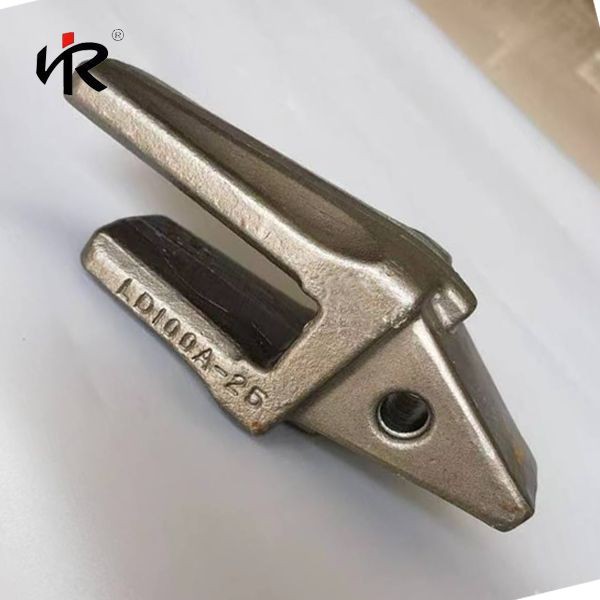
At our company, we have extensive experience in designing and manufacturing hot forging parts for a wide range of industries. We offer a comprehensive range of Forged Mechanical Fastener, Forge Bucket Adapter, and Forestry Machinery Waer Parts, all of which are manufactured to the highest quality standards using the latest technology and equipment.
If you're looking for a reliable supplier of hot forging parts, we'd love to hear from you. Please contact us to discuss your specific requirements and learn more about how we can help you achieve your goals.

References
- ASM Handbook, Volume 14A: Metalworking: Forging. ASM International, 2013.
- Dieter, G. E. (2000). Mechanical Metallurgy. McGraw-Hill Education.
- Kalpakjian, S., & Schmid, S. R. (2008). Manufacturing Engineering and Technology. Pearson Prentice Hall.
